Workshop Report: Keywords for India, and Beyond?

In thisย report, Lerato Posholi (researcher in the Reversing the Gaze project) discusses the workshop ”Keywords for India, and beyond? Enriching the Global Social Science Vocabulary” with Rukmini Bhaya Nair (Indian Institute of Technology, Delhi) and Peter deSouza (Goa University). The event was organized by Ralph Weber (Principle Investigator of the project) and Lerato Posholi as an inception workshop in the framework of the Reversing the Gaze project.


Keywords for India, and Beyond? Enriching the Global Social Science Vocabulary

On the 7th of May 2021, Prof. Ralph Weber and Dr Lerato Posholi organized a workshop with Prof. Rukmini Bhaya Nair (Indian Institute of Technology, Delhi) and Prof. Peter deSouza (Goa University). The workshop used Bhaya Nair and deSouzaโ€™s book ยซKeywords for India: A conceptual lexicon for the 21st centuryยป as a point of departure for reflecting on the core question of whether, and how, certain keywords for and from India (e.g. guru or nirvana or policy paralysis) can apply or be used to study contexts beyond India. The discussion covered some of the central themes of the Sinergia project ยซReversing the gaze: towards post-comparative area studiesยป on the politics of conceptual travel, theoretical challenges to using concepts beyond their context of origin, and broader concerns around the nature of comparison.

Two broad sets of critical insights were foregrounded in the contributions and discussions between invited speakers and participants. The first set of insights raised questions regarding the notion of โ€นreversing the gazeโ€บ: what does it mean? Which gaze are we reversing? Why must we โ€นreverse the gazeโ€บ? How do we โ€นreverse the gazeโ€บ? Prof. Bhaya Nair highlighted that the notion of โ€นreversing the gazeโ€บ commonly amounts to a call to study Europe just as Europe studies the rest of the world but proposed that โ€นreversing the gazeโ€บ should go beyond this to inspire ways of seeing the world anew. She remarked that in their book, the placing of โ€นbig academic conceptsโ€บ such as democracy and subaltern next to everyday Indian keywords such as balti (Hindi/Urdu for โ€นbucketโ€บ) can provide new perspectives on the world. Prof. deSouza added a critical perspective on the notion of โ€นreversing the gazeโ€บ by raising the question: ยซwho is doing the gazing?ยป This question is loaded with topical issues about positionality and how it affects knowledge production.

The second set of insights surrounded the topic of concept travel. On this topic, the concern was whether all concepts can travel and what the conditions of possibility for concept travel are. Two key points were raised on this issue. The one point was that concepts can be deeply embedded in certain theoretical frameworks and socio-cultural contexts, making it difficult for them to be applicable outside their contexts of origin. The speakers emphasized that some of the keywords for India may be so embedded in Indian contexts that they are not applicable elsewhere, or may first need to be made fit for travelling, as had been the case with karma. The second point raised a word of caution against taking for granted that travelling concepts retain their original meaning in different contexts. Concepts, especially social concepts, tend to expand or change meaning precisely in their travelling. For example: the concept of human rights, some may say, has expanded and evolved precisely because the original conception of human rights has been challenged in applications of the concept in many different contexts.

Overall, the fruitful discussions from the workshops raised important questions that will help us do some ground clearing in the Sinergia project. These questions and insights call for careful clarification of what is meant by โ€นreversing the gazeโ€บ in the project and an illustration of how this reversal of the gaze can produce post-comparative area studies.


This report was originally written for the monthly newsletter of the Institute for European Global Studies (University of Basel):

> Newsletter: Nr. 132 Juli 2021 | Europainstitut | Institute for European Global Studies

Peter deSouza
Ralph Weber
Lerato Posholi

Towards Post-Comparative Philosophy: Interview with Ralph Weber

In a recent interview Ralph Weber, Principle Investigator in the Reversing the Gaze project, discussed his vision of a post-comparative philosophy with Nevad Kahteran (University of Sarajevo). The discipline, he says, should allow philosophers to be informed by a global outlook and use a variety of styles and conceptualizations from different traditions.

Weber seeks to address the issues of Eurocentrism and methodological problems in comparative philosophy. His book “Comparative Philosophy without Borders” (co-edited with Arindam Chakrabarti) analyzes previous approaches to comparative philosophy and offers paths towards post-comparative avenues.


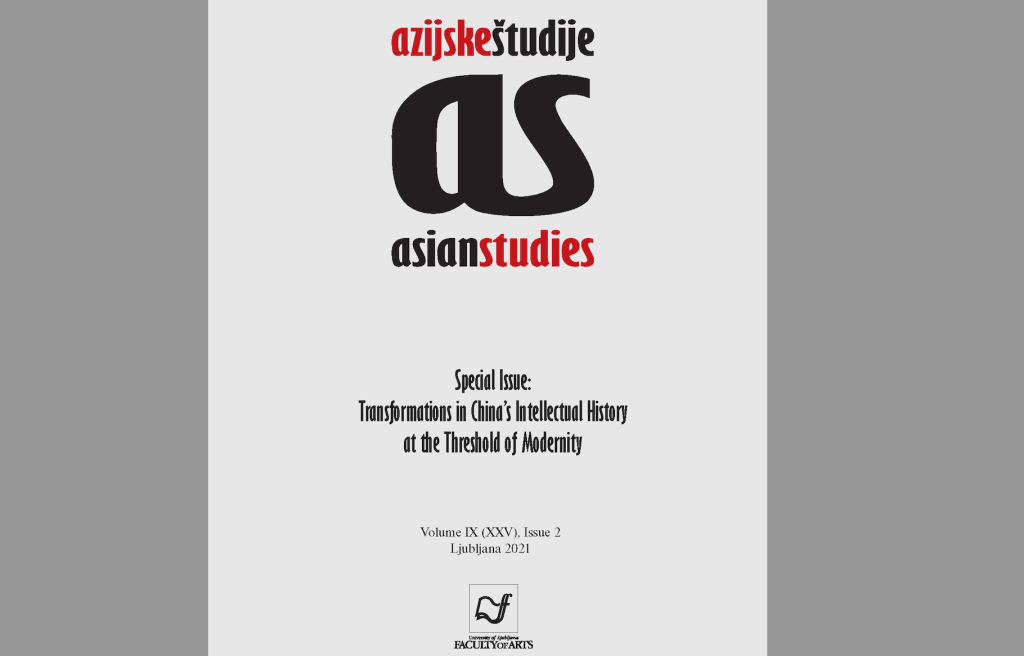
> Article: ”Towards Post-Comparative Philosophy: Interview with Ralph Weber”, Asian Studies, 9(2),pp. 211-221 (open access)

> Book: ”Comparative Philosophy without Borders”, edited Arindam Chakrabarti and Ralph Weber (2015, Bloomsbury Academic)

Ralph Weber

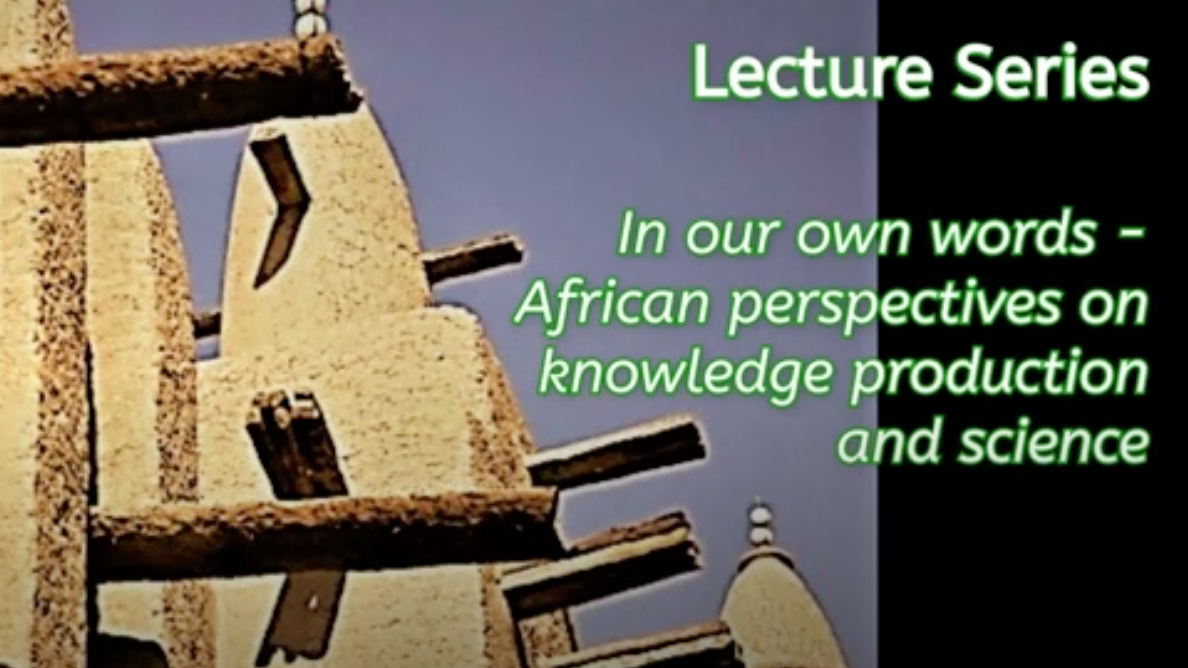
”In our own words – African perspectives on knowledge production and science” – lecture by Elรญsio Macamo

In his lecture, Elรญsio Macamo, Principle Investigator in the Reversing the Gaze project, discusses the field of African Studies as the reflection of how one comes to the knowledge of Africa and the ability to talk truthfully about the African continent.

The online lecture series “In our own words – African perspectives on knowledge production and science” wasย developed in the framework of the Pilot African Postgraduate Academy and is as a cooperation of Prof Dr Elรญsio Macamo, Prof Dr Mamadou Diawara and L.I.S.A.Science Portal of the Gerda Henkel Foundation.ย 


> See the lecture on the L.I.S.A Website

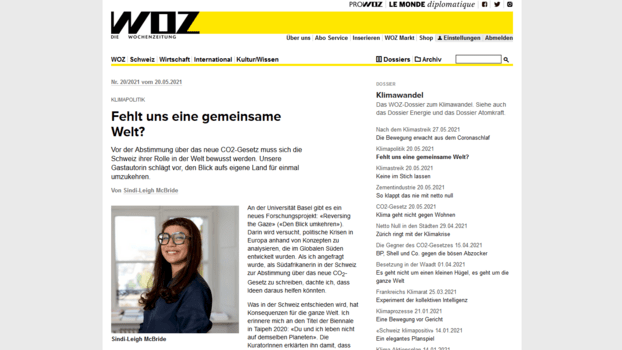
In the media: ”Fehlt uns eine gemeinsame Welt?”

In the run-up to the national vote on the Co2 law in Switzerland, a guest article in the Swiss weekly WoZ calls for the country to become aware of its role in the world and refers to the research project “Reversing the Gaze”. The author, Sindi-Leigh McBride is a PhD candidate at the Centre for African Studies of the University of Basel, with a guest article in WoZ (20 May 2021)

The article is written in German.

>“Fehlt uns eine gemeinsame Welt?” on woz.ch (paywall)

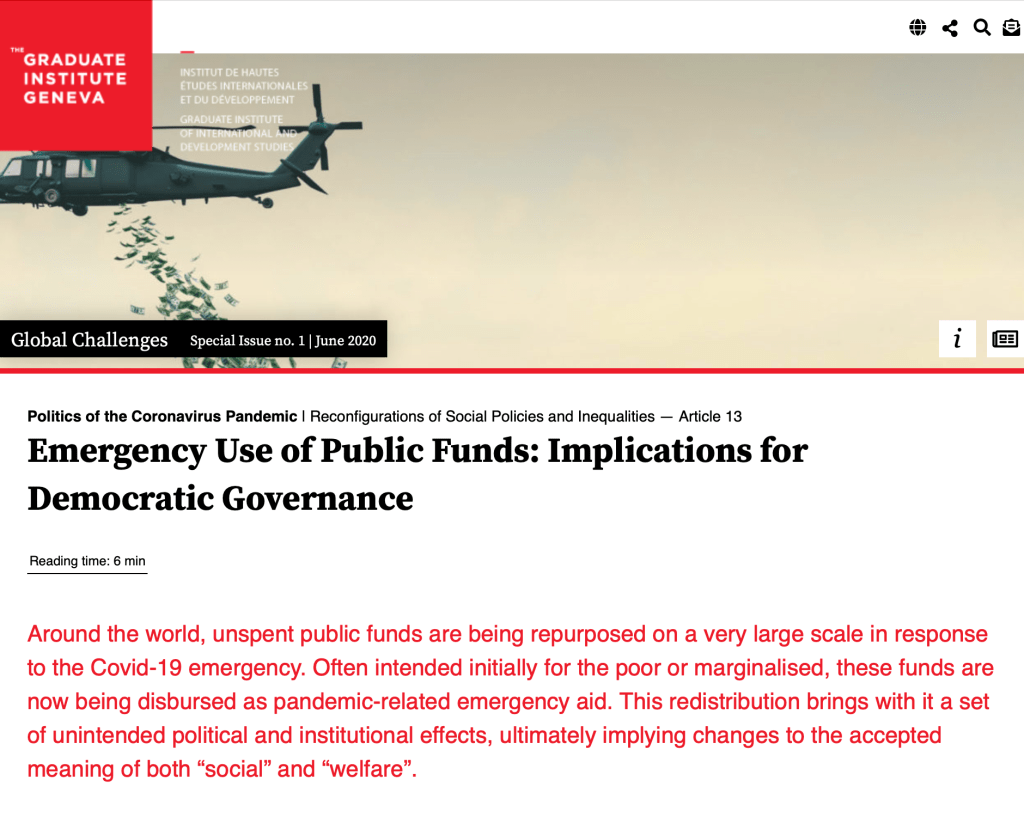
Publication: ”Emergency Use of Public Funds: Implications for Democratic Governance”


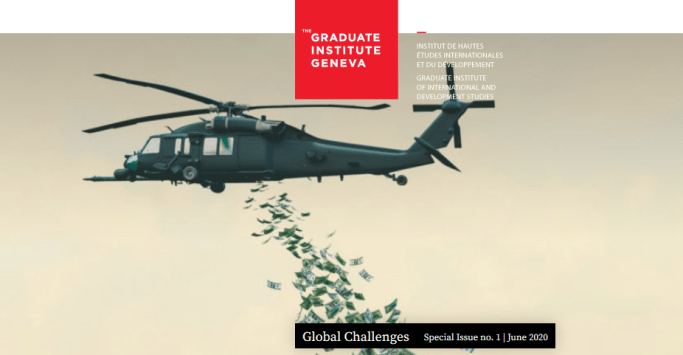
In this paper, three of our project team: Shalini Randeria (Fellow), Deval Desai (Principal Investigator) and Christine Lutringer (Researcher) demonstrate a set of unintended political and institutional effects of the emergency mobilisation of unspent social welfare funds under Covid-19.

This article was originally written for Global Challenges:

> Desai, D., Lutringer, C., & Randeria, S. (2020) Emergency Use of Public Funds: Implications for Democratic Governance, Global Challenges, special issue no. 1, June.


Christine Lutringer

Shalini Randeria

Deval Desai

Interview with Elรญsio Macamo and Ralph Weber on the project “Reversing the Gaze”

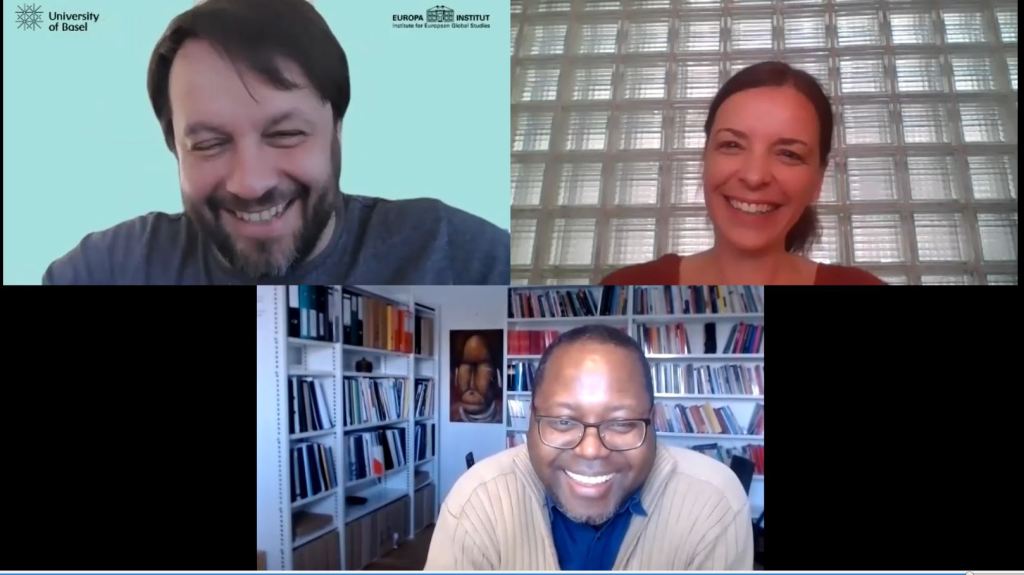
Prof. Ralph Weber (top left), Prof. Elรญsio Macamo (bottom row) and Anita Soltermann (top right) during the interview.

The Grants Office of the University of Basel interviewed two of our principal investigators, Elรญsio Macamo and Ralph Weber, about the project ”Reversing the Gaze”, interdisciplinarity, trends in research funding, and the Covid-19 crisis.


Read the interview on the Grants Office’s website

Elรญsio Macamo

Ralph Weber

Research Colloquium, Spring Semester 2021: “Comparison and Beyond”

The focus of this semester is on methodological and conceptual issues concerning comparison. In particular, the colloquium will discuss recent critical reflections on, and engage with new perspectives for, social scientific comparison.

After an introduction to the general topic in the first two sessions, four sessions will address current comparative research and reflect on the methodological and conceptual implications for different disciplines and research areas. The final session will pick up on questions raised previously and discuss new approaches in the social sciences in general and in Area Studies in particular.


program

Wed 10.03.2021, 12.15-14.00
Introduction to Comparison
Ralph Weber (Institute of European Global Studies, University of Basel)


Wed 24.03.2021, 12.15-14.00
Post-Comparison and Mid-Level Concepts
Ralph Weber (Institute of European Global Studies, University of Basel)


Wed 07.04.2021, 12.15-14.00
Reversing the Gaze: Anthropological Experiments โ€“ Steps towards Decolonization?
Peter Geschiere (Emeritus Professor of Social Anthropology, Amsterdam)


Wed 21.04.2021, 12.15-14.00
Anthropology and the positivist legacy of comparative agendas. Theoretical concepts and their epistemological power
Till Fรถrster (Institute of Social Anthropology, Department of Social Sciences, University of Basel)


Wed 05.05.2021, 12.15-14.00
What do (research ) objects stand in for? Sociological implications of comparison
Elรญsio Macamo (Centre for African Studies Basel/Department of Social Sciences, University of Basel)


Wed 19.05.2021, 12.15-14.00
Generating concepts for global urban studies: Reformatting comparative urbanism
Jennifer Robinson (Department of Geography, University College London)


Wed 02.06.2021, 12.15-14.00
Reversing the gaze as a response to Eurocentrism: some preliminary thoughts
Lerato Posholi (Institute of European Global Studies, University of Basel)


The colloquium takes place online via Zoom. If you are interested in participating, please register via email to: rtg@unibas.ch.


PhD candidates and advanced MA students can earn credits (3 ECTS credit points). In order to do so, participants should either present a paper on their ongoing research; discuss a core text in a reading session; act as a discussant on one of the sessions; or write a report on one of the sessions.

PhD candidates and students at the University of Basel can register for the course via MOnA (course no. 60720-01).

PhD candidates and students at other Swiss universities can register via the University of Basel Student Administration Office.